Athens for Two: The Acropolis, Ancient Ruins and Rooftop Bars with a View
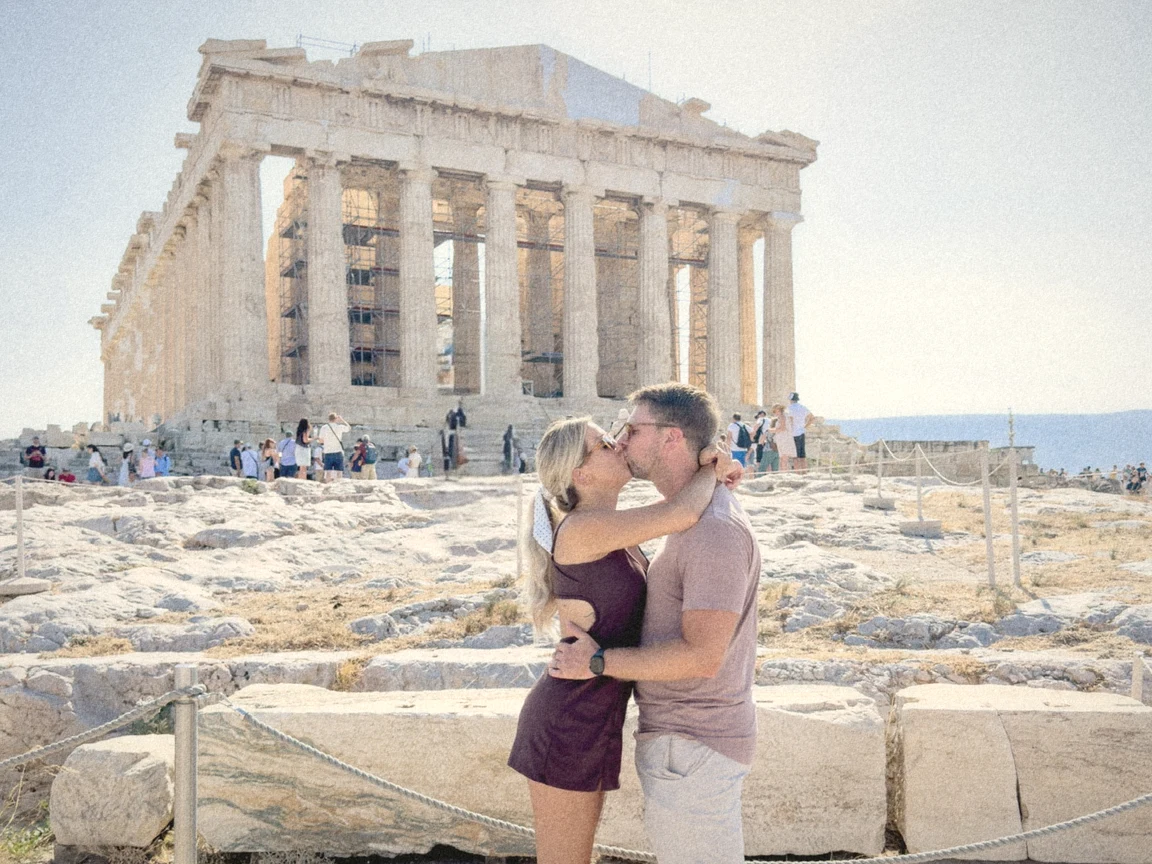
Athens was the start of our Greece trip, and it was so much more than a stopover on the way to the islands. It's a city where 2,500-year-old temples stand at the end of the street, every rooftop seems to face the Parthenon, and the evenings are long, warm and made for two.
We visited in late summer, stayed right in the centre and walked almost everywhere. Here's how we spent it: the ruins, the rooftops, the spa that saved us after the flight, and the one dish we ordered at every table.
Our Athens itinerary at a glance
- Arrival evening: check in to The Pinnacle Athens, then dinner on the roof at Taratsa, facing the Acropolis.
- Ruins morning: an early small-group Greek mythology tour of the Acropolis and its slopes with Alternative Athens, the best way to beat the heat and the crowds.
- Midday walk: down from the Acropolis to Hadrian's Arch.
- Afternoon: Niche Spa, where you relax among real ancient ruins, and the lymphatic drainage massage I needed after travelling.
- Evenings: rooftop bars with the Parthenon lit up across the city: MS Roof Garden, and Attic for our last night in Athens.
A central hotel, and dinner on the roof at Taratsa
We stayed at The Pinnacle Athens, a boutique hotel at 75 Aiolou Street in the old Commercial Triangle, the historic market district between Monastiraki and Omonia. The hotel was beautiful, and the staff were so helpful with every question, booking and recommendation. (More on the hotel below.)
Our first dinner was at Taratsa Athens, a rooftop restaurant and bar at 60 Mitropoleos Street, about an eight-minute walk from the hotel. Honestly? A 10/10. You climb the stairs to the roof and the Acropolis is right there, with the Plaka rooftops below. The kitchen mixes Greek and Levantine flavours, cooked over fire in an open kitchen with a wood oven and a robata grill, and the cocktails are just as creative. Look for the big mirror behind the bar, which reflects the Acropolis back at you. Book a table for sunset and stay as the Parthenon lights up.
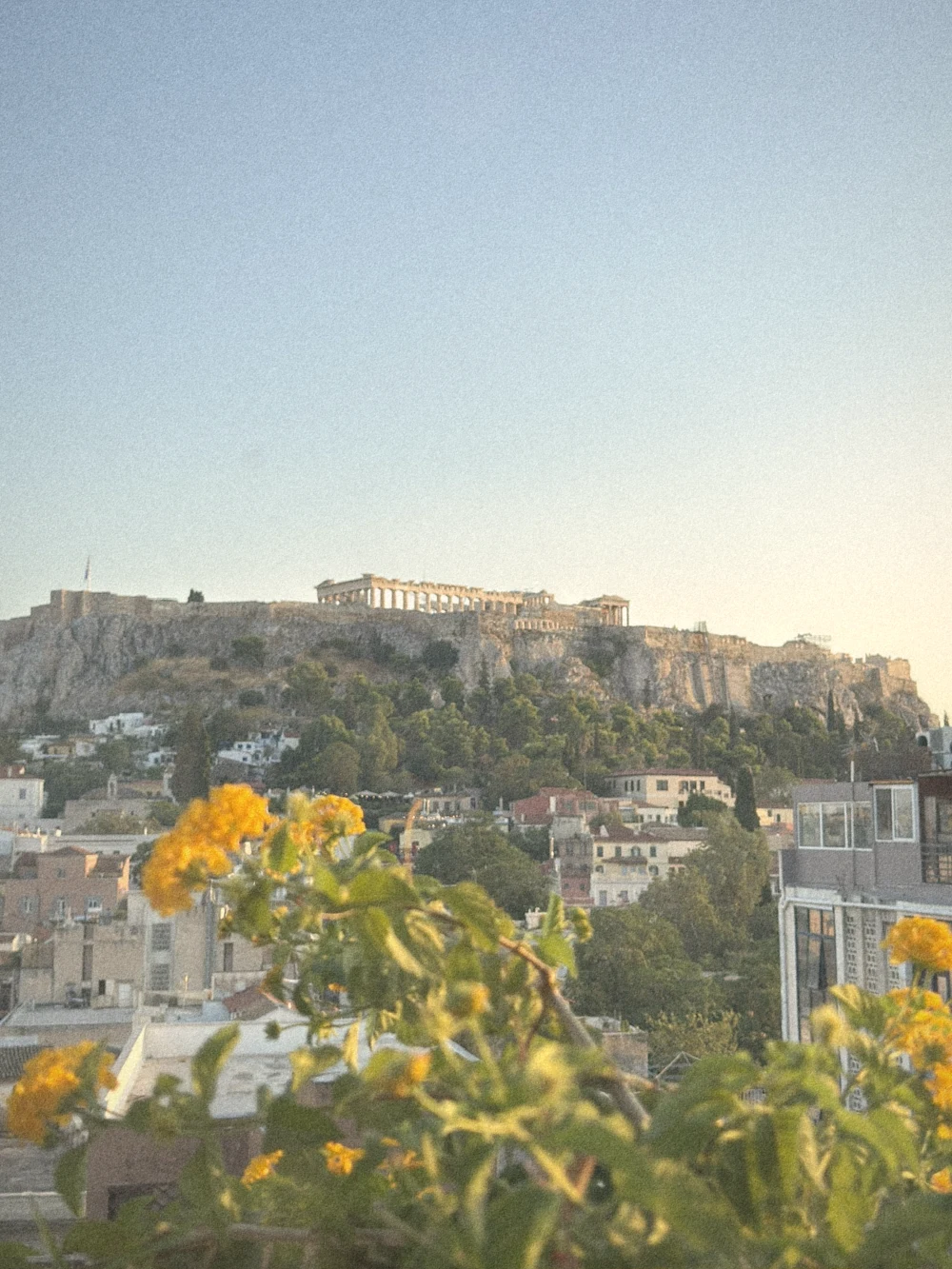
Our golden-hour photos of the Acropolis were all taken from that roof, between the flower planters, as the rock turned gold and then pink.
The Acropolis and the ruins: the part we'll never forget
We booked an early small-group Greek mythology tour of the Acropolis and its slopes with Alternative Athens, and it was the right call. A licensed guide leads a small group from Hadrian's Arch up through the Theatre of Dionysus to the top of the Acropolis, then down to the Ancient Agora. Hearing the myths behind each temple (Athena and Poseidon fighting over the city, the gods watching the plays below) made the stones come alive. Starting early also means cooler air and far fewer people at the top.
Walking among these ruins together was genuinely one of the coolest things we have ever done. Here's what to look for, in plain words.
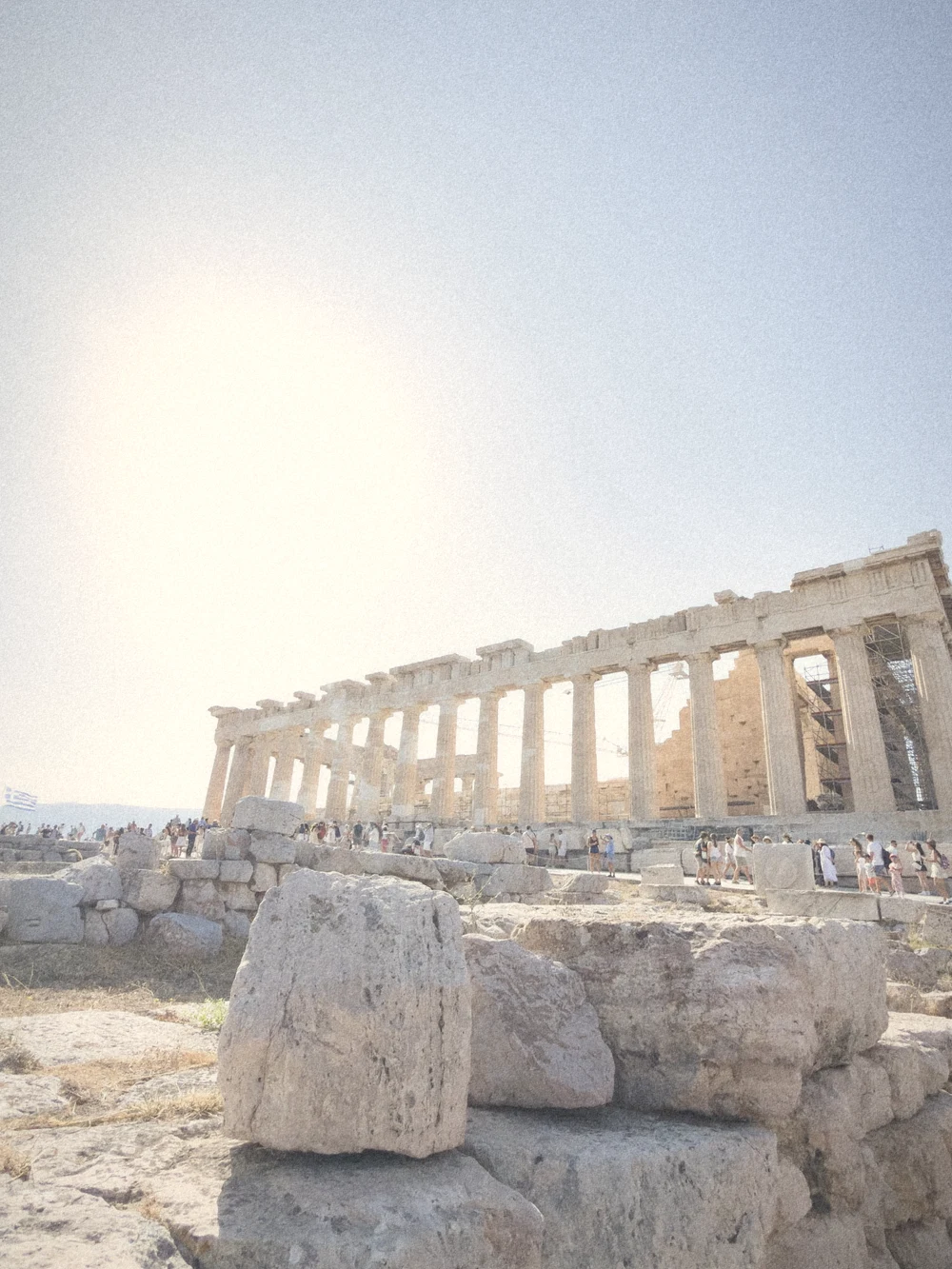
The Parthenon
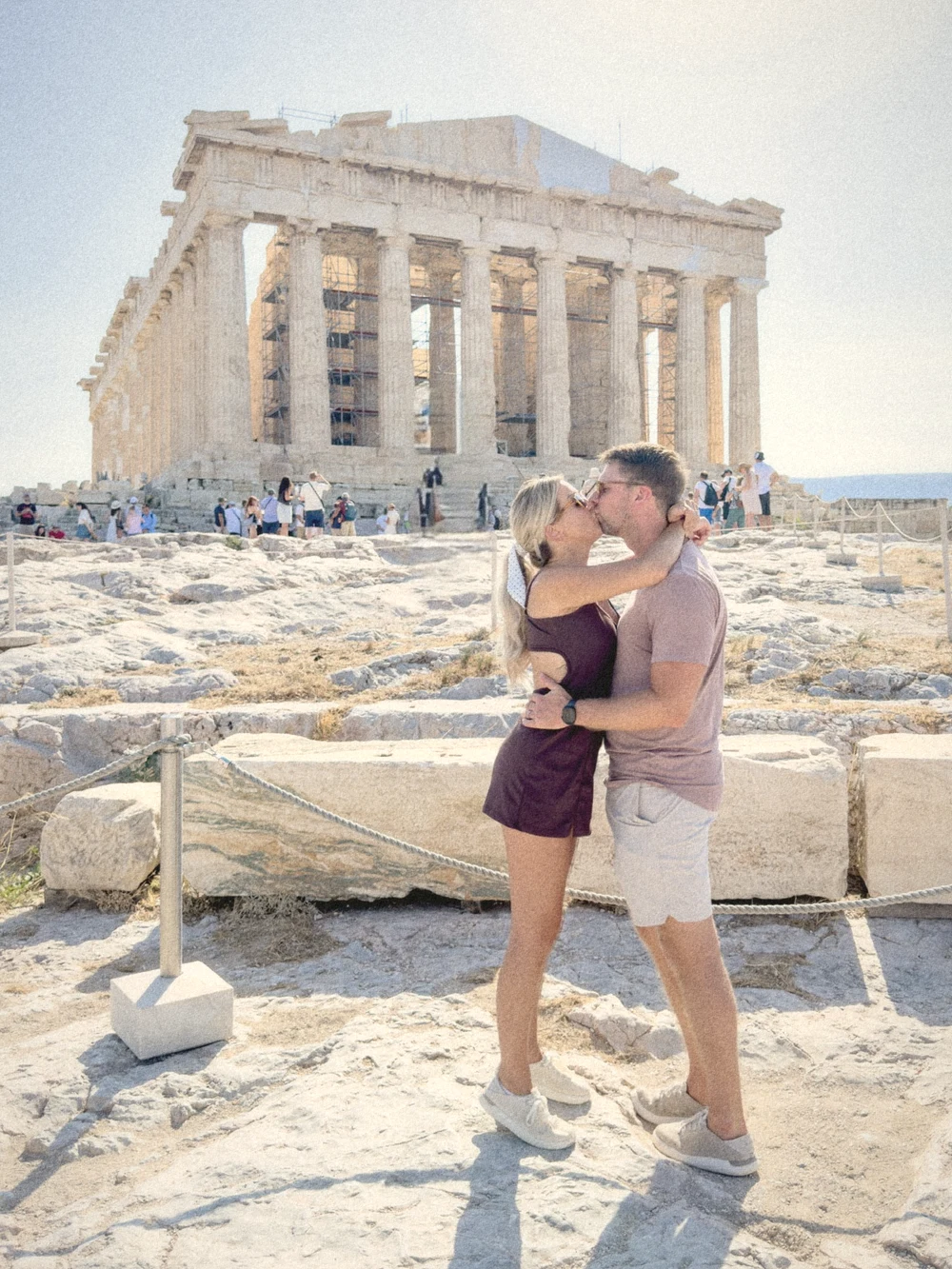
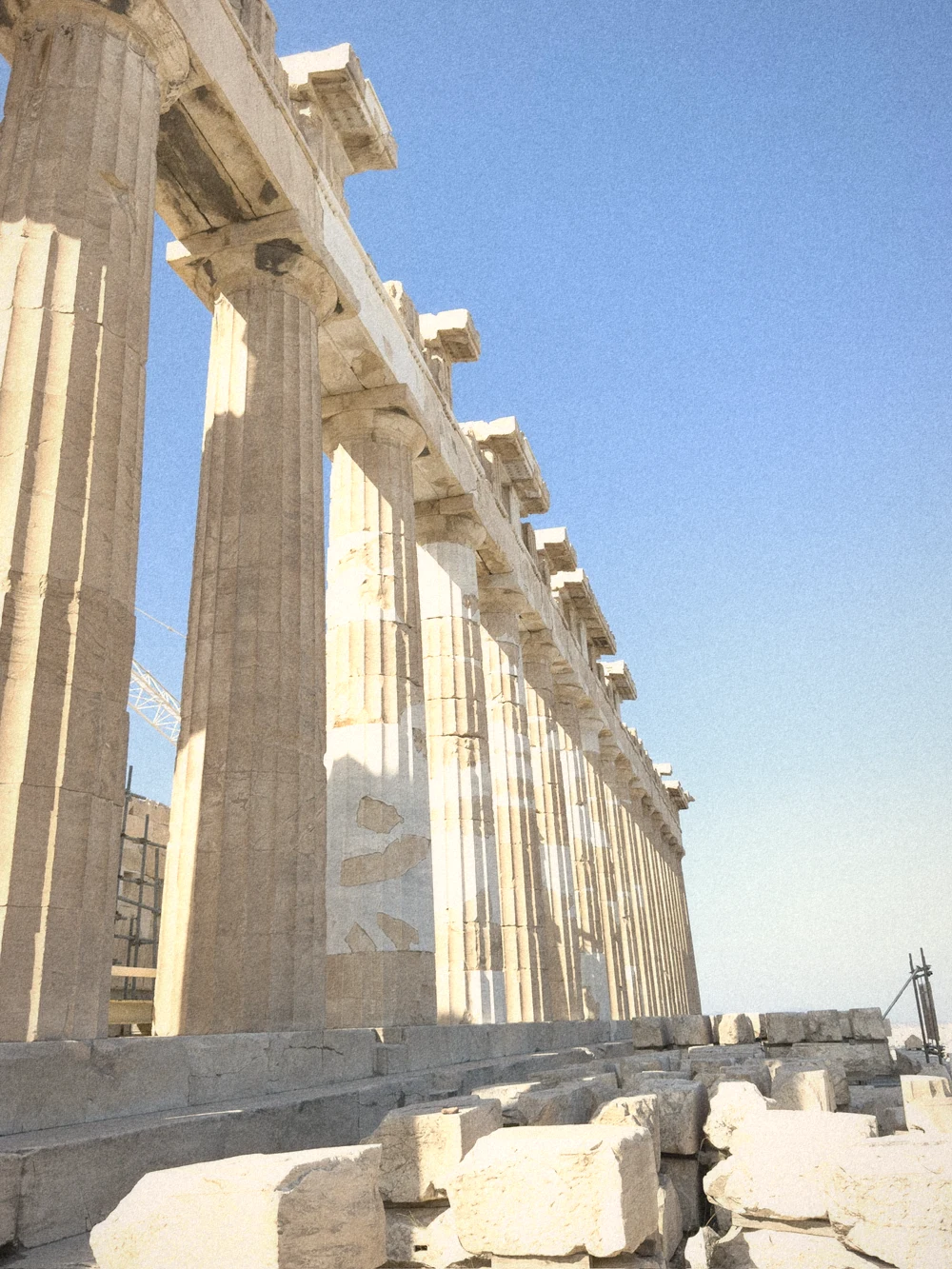
Athens' great temple to Athena, built between about 447 and 432 BC under the statesman Pericles, with the sculptor Phidias leading the decoration. It stood almost whole for over two thousand years, until 1687, when a Venetian shell hit gunpowder the Ottomans had stored inside and blew out its middle. The cranes and scaffolding you'll see are part of a restoration that has been going on for decades.
The Erechtheion and its olive tree
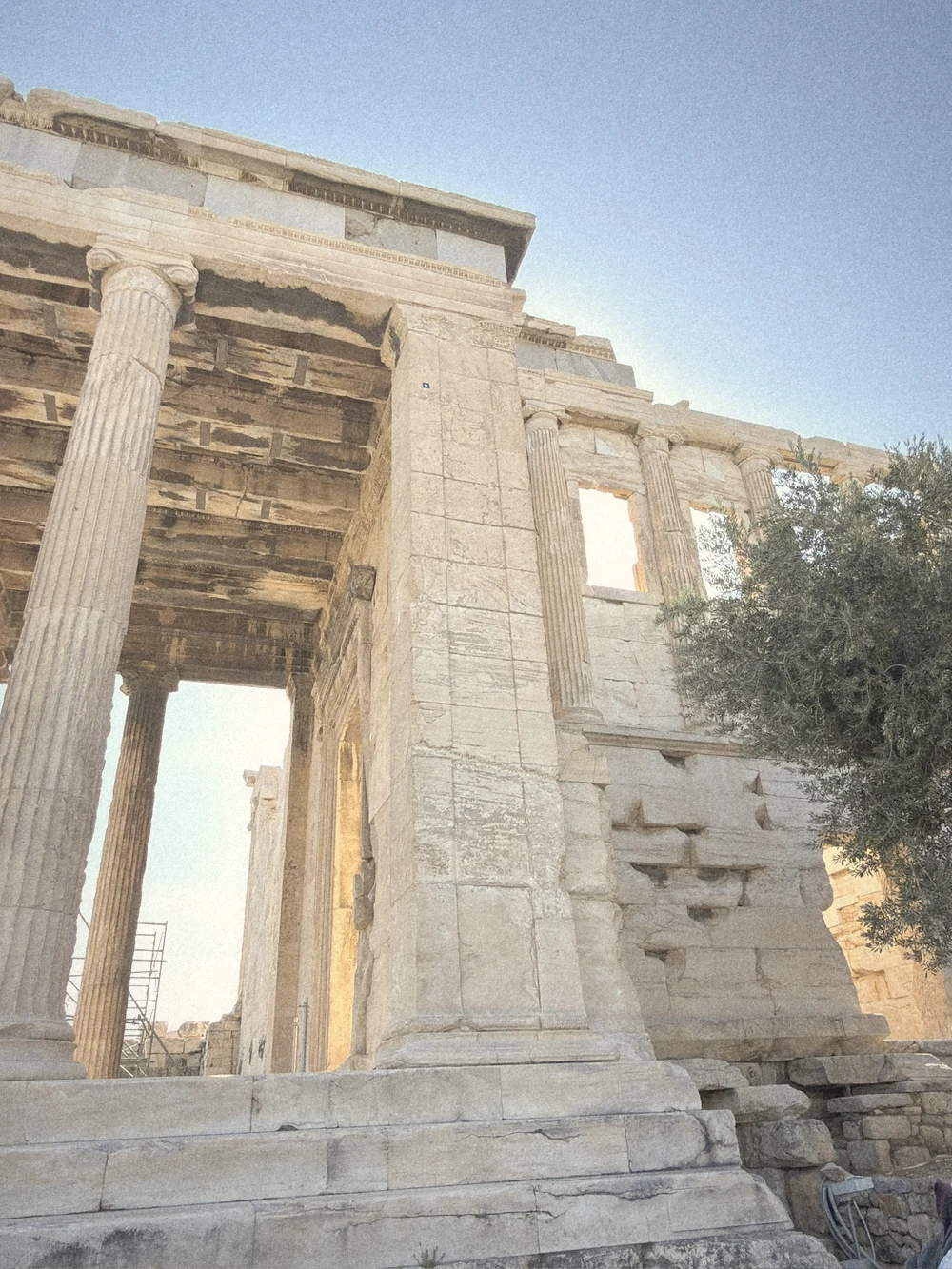
The elegant temple beside the Parthenon, finished around 406 BC, is famous for its Porch of the Maidens: six statues of women (the Caryatids) holding up the roof. The ones on the temple today are copies; five originals are in the Acropolis Museum and one is in the British Museum. To see them up close, the Acropolis Museum sits at the foot of the rock, a short walk from the south slope, and timed tickets are worth booking ahead in summer. Look for the olive tree growing beside it, a nod to the myth that Athena won the city by giving it the first olive tree.
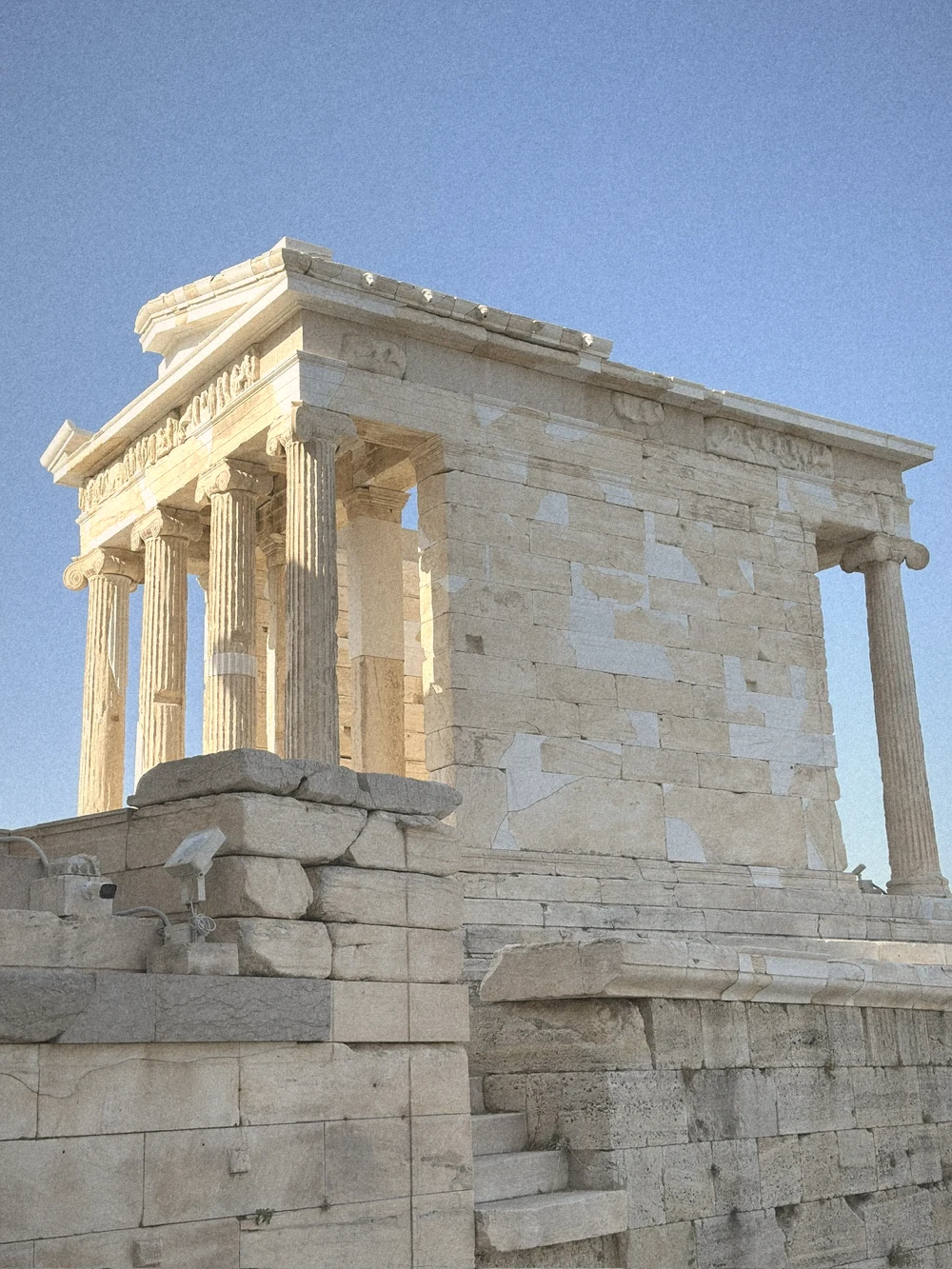
The Temple of Athena Nike
The little temple perched on the corner by the entrance is dedicated to Athena as goddess of victory. It's the smallest temple on the Acropolis, built in the 420s BC. In the 1680s the Ottomans took it apart to build a defensive wall, and it was pieced back together, block by block, in the 1800s.
The Odeon of Herodes Atticus
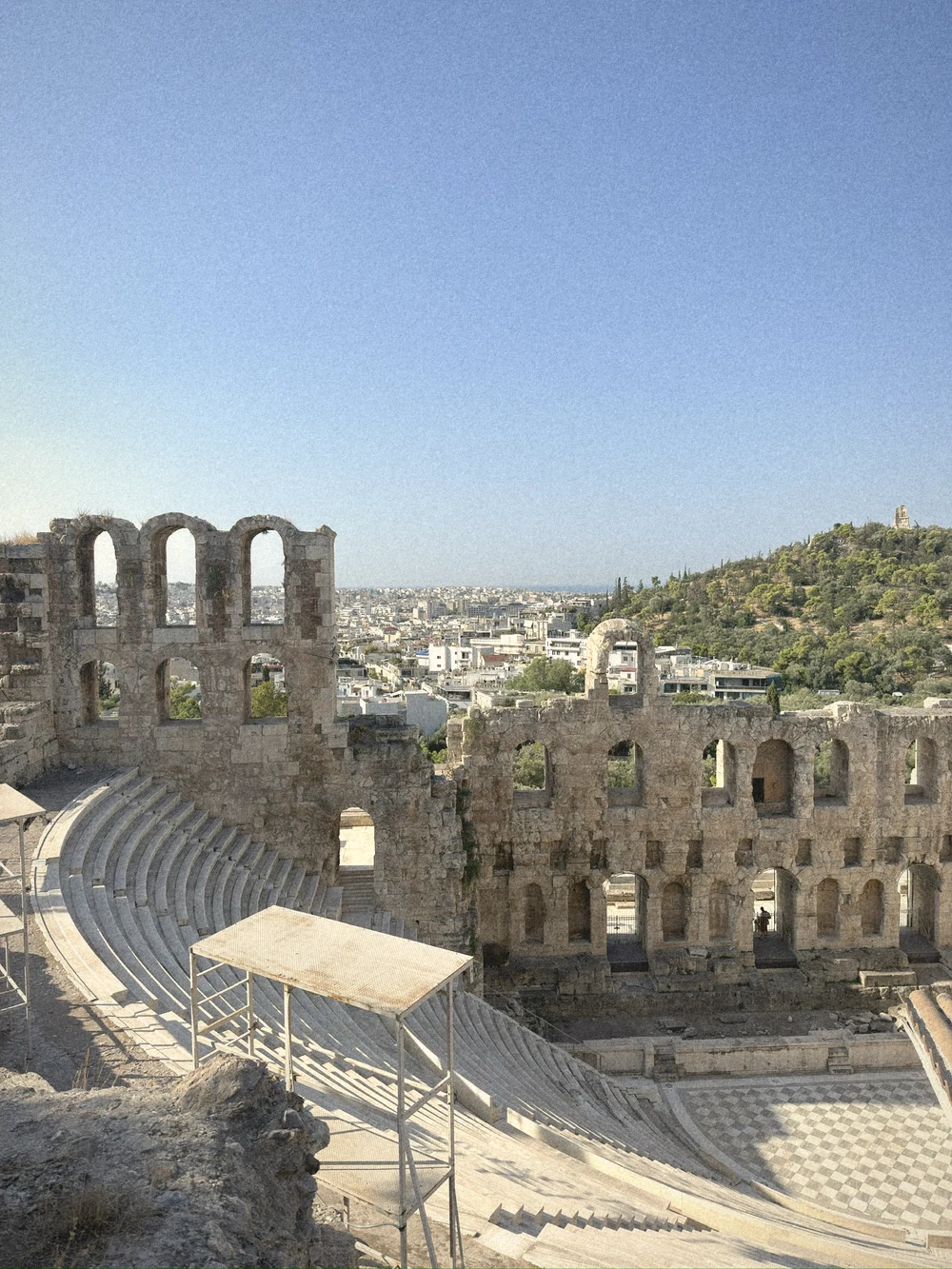
The tall stone arches on the south slope belong to a Roman-era theatre built in AD 161 by a wealthy Athenian, Herodes Atticus, in memory of his wife Regilla. It was restored in the 1950s and still hosts concerts and plays in summer. Watching a show here, under the Acropolis, is on our list for next time.
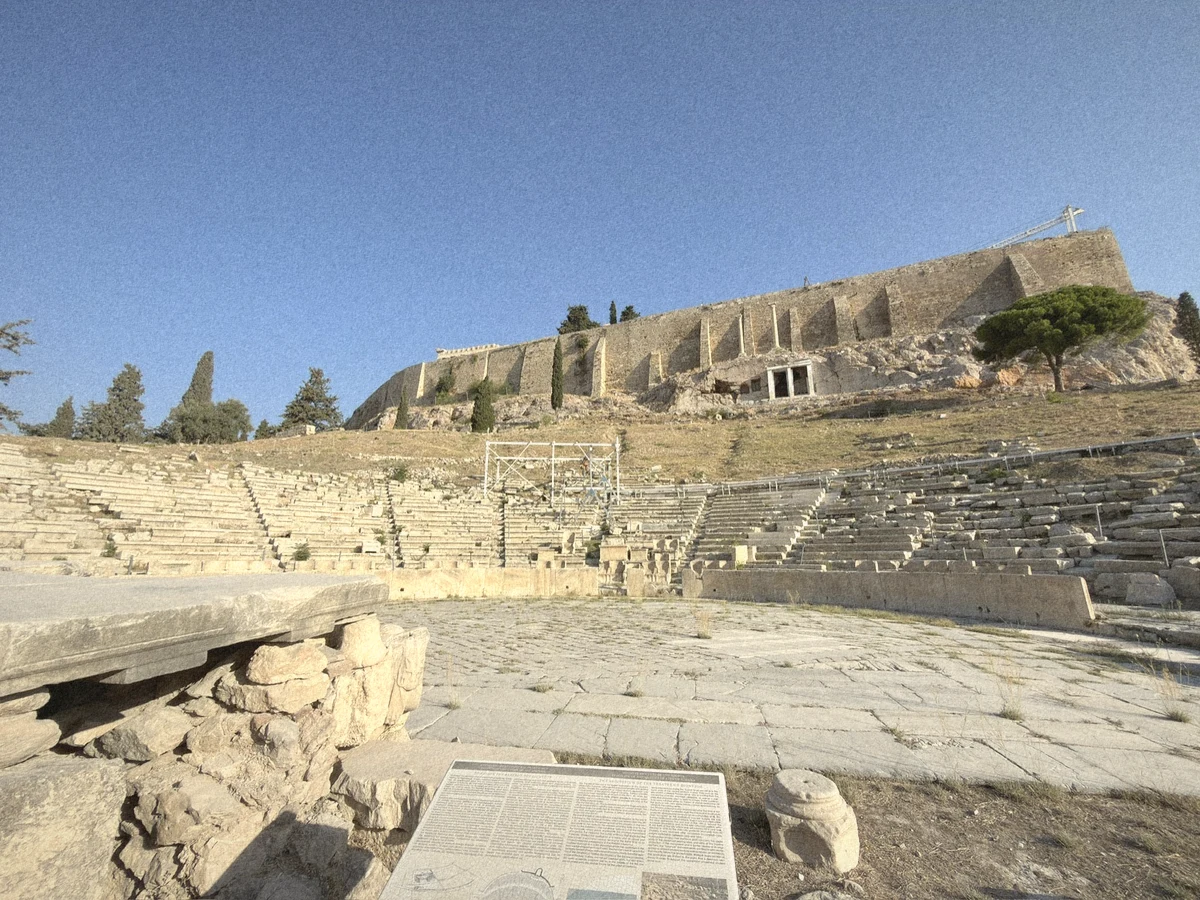
The Theatre of Dionysus
This is where theatre as we know it was born. The tragedies of Aeschylus, Sophocles and Euripides and the comedies of Aristophanes were first performed here, at festivals for the god Dionysus. The stone seats were built in the 4th century BC and held thousands of people; in the front row, look for the carved marble seats of honour reserved for priests.
Hadrian's Arch: the gateway between two cities
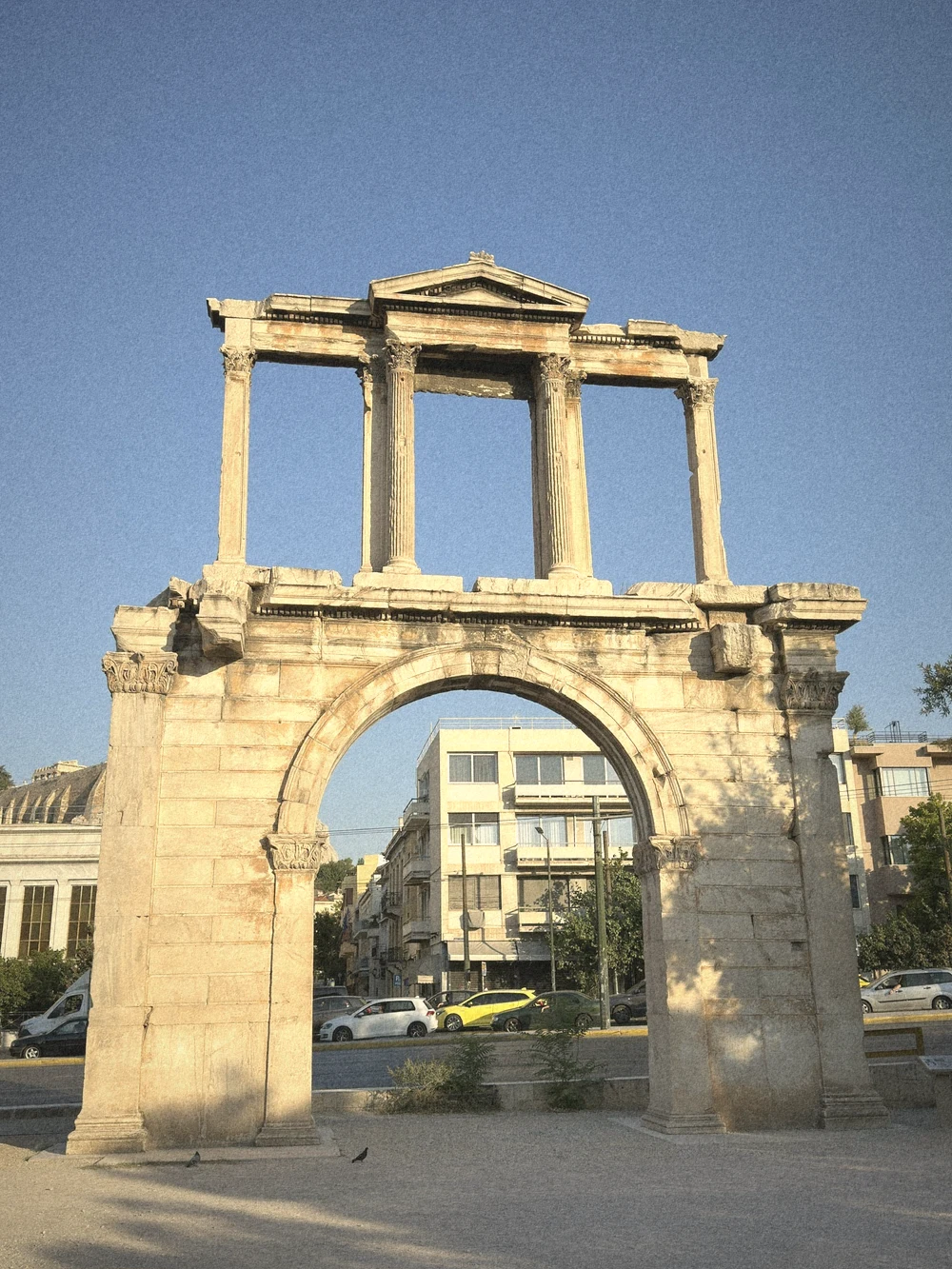
From the south slope it's an easy, flat walk to Hadrian's Arch, built around AD 131 to honour the Roman emperor Hadrian. It marked the line between the old city and his new one, and its two inscriptions say exactly that: one side reads "This is Athens, the ancient city of Theseus," and the other, "This is the city of Hadrian, and not of Theseus."
Walk everywhere (yes, really)
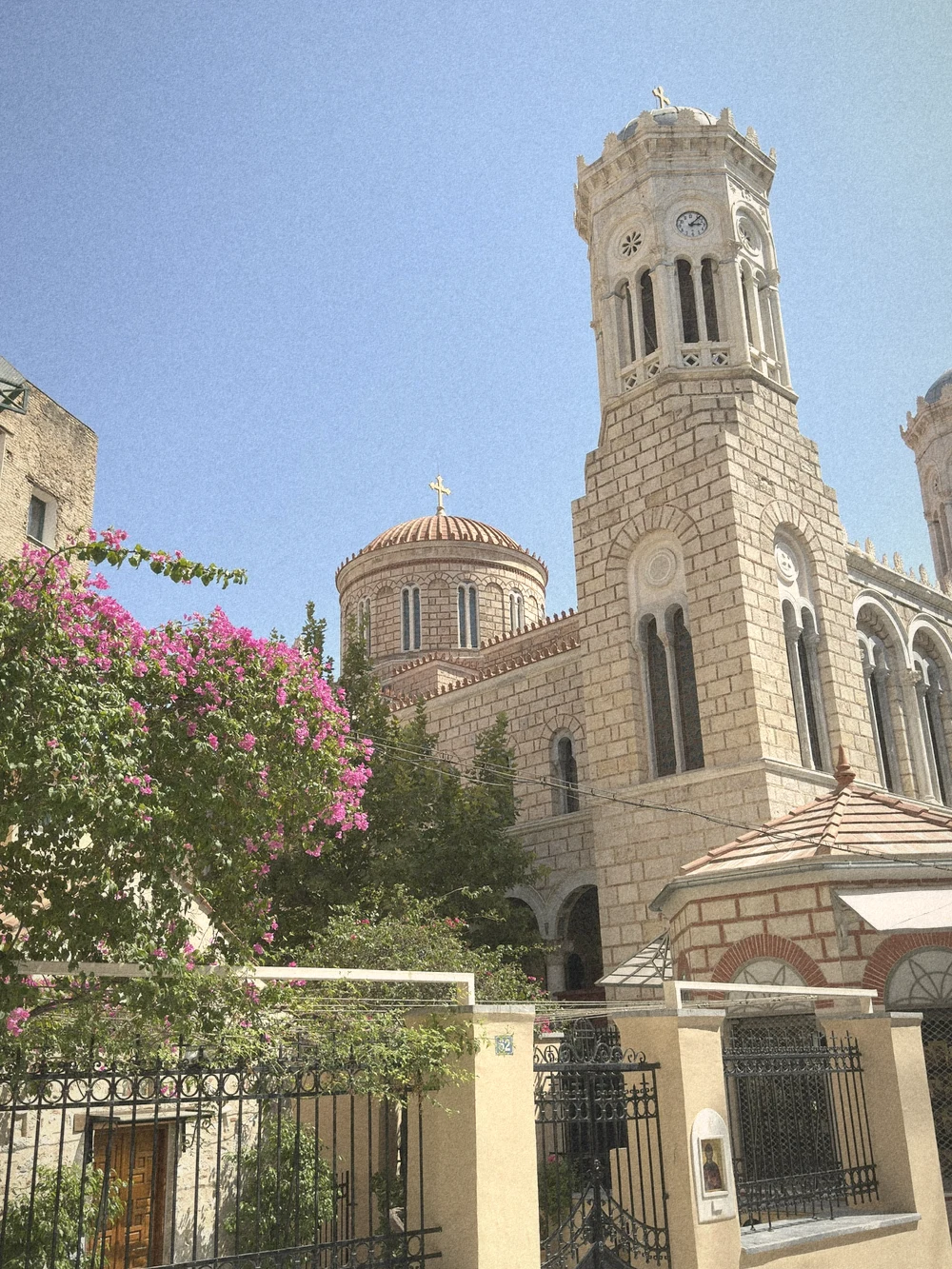
We walked almost everywhere from our hotel, and it was one of our favourite parts of Athens. The historic centre is compact, and walking is how you stumble onto the little things: a church tucked behind bougainvillea, a kiosk selling cold water, a view of the Acropolis down a side street. Approximate walking times from The Pinnacle Athens (75 Aiolou):
- Monastiraki Square: about 6 minutes
- MS Roof Garden and Attic (both by Monastiraki): about 5 to 7 minutes
- Taratsa (Mitropoleos Street): about 8 minutes
- Plaka: about 10 to 15 minutes
- The Acropolis entrance: about 17 to 20 minutes, uphill at the end
- Hadrian's Arch: about 17 minutes
- Niche Spa (Syngrou Avenue): about 20 to 25 minutes
In the summer heat, walk in the morning and the evening, carry water, and wear shoes with real grip. The marble paths on the Acropolis have been polished smooth by centuries of footsteps.
AfternoonNiche Spa: a massage among 2,300-year-old ruins
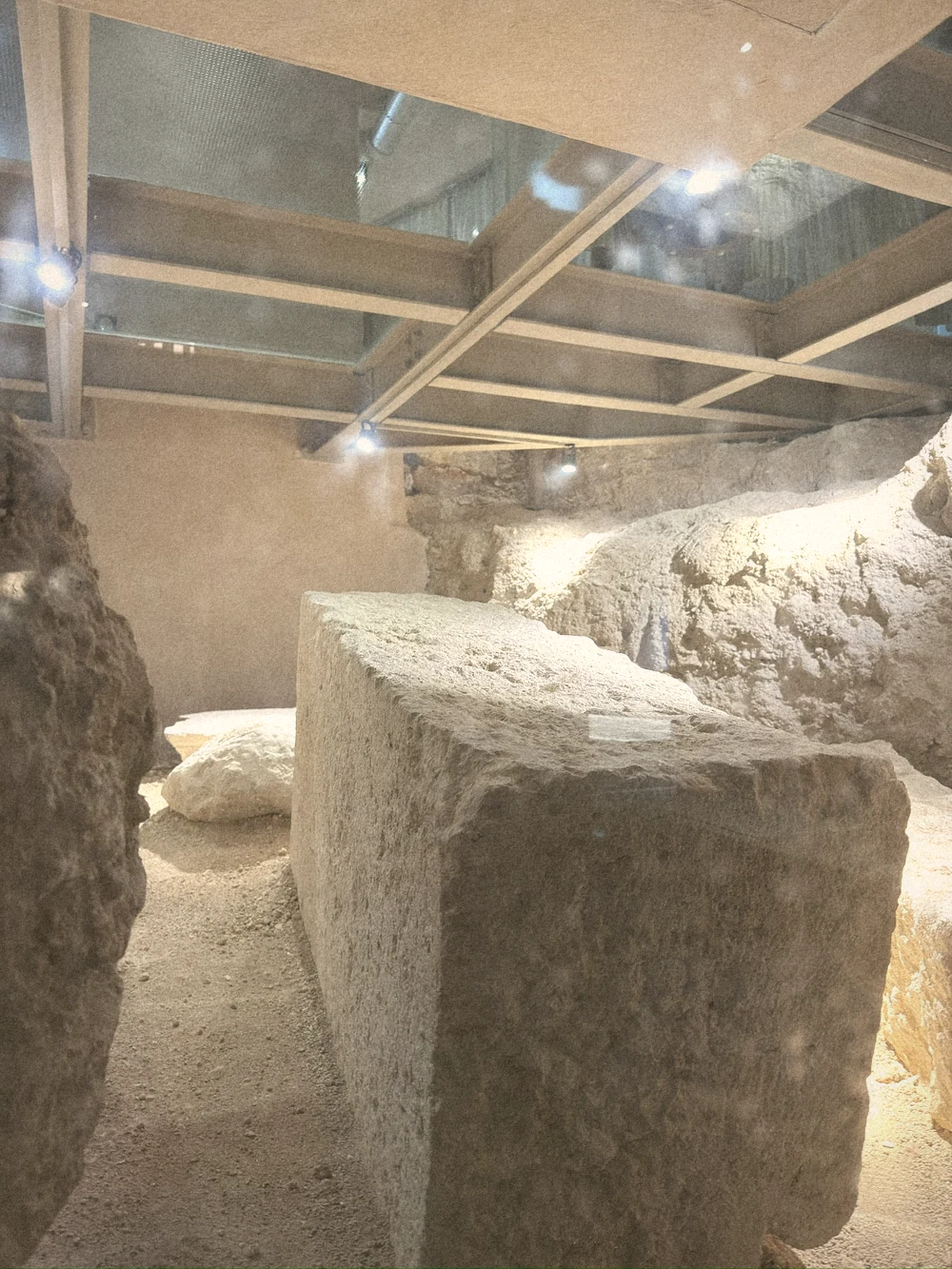
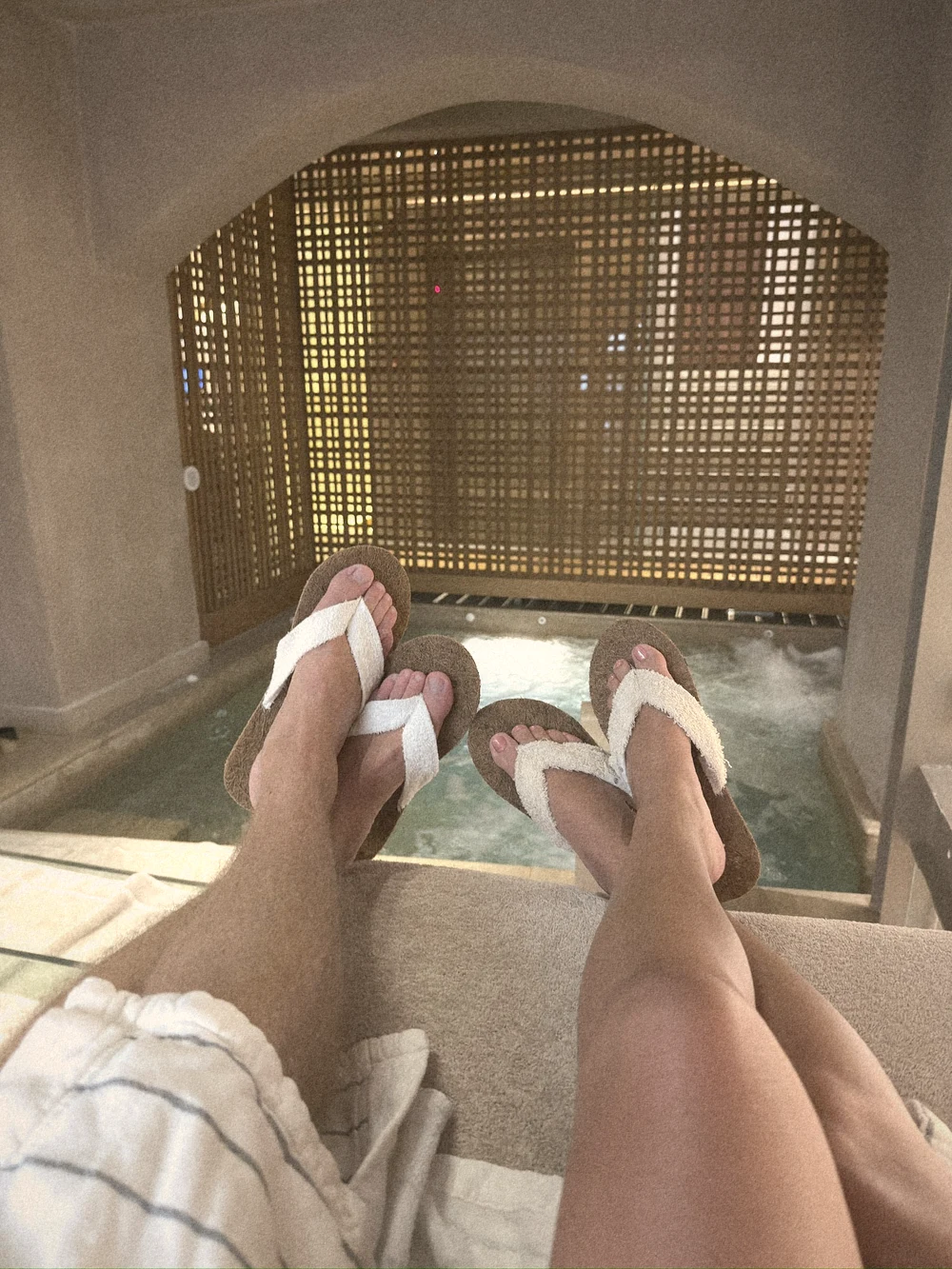
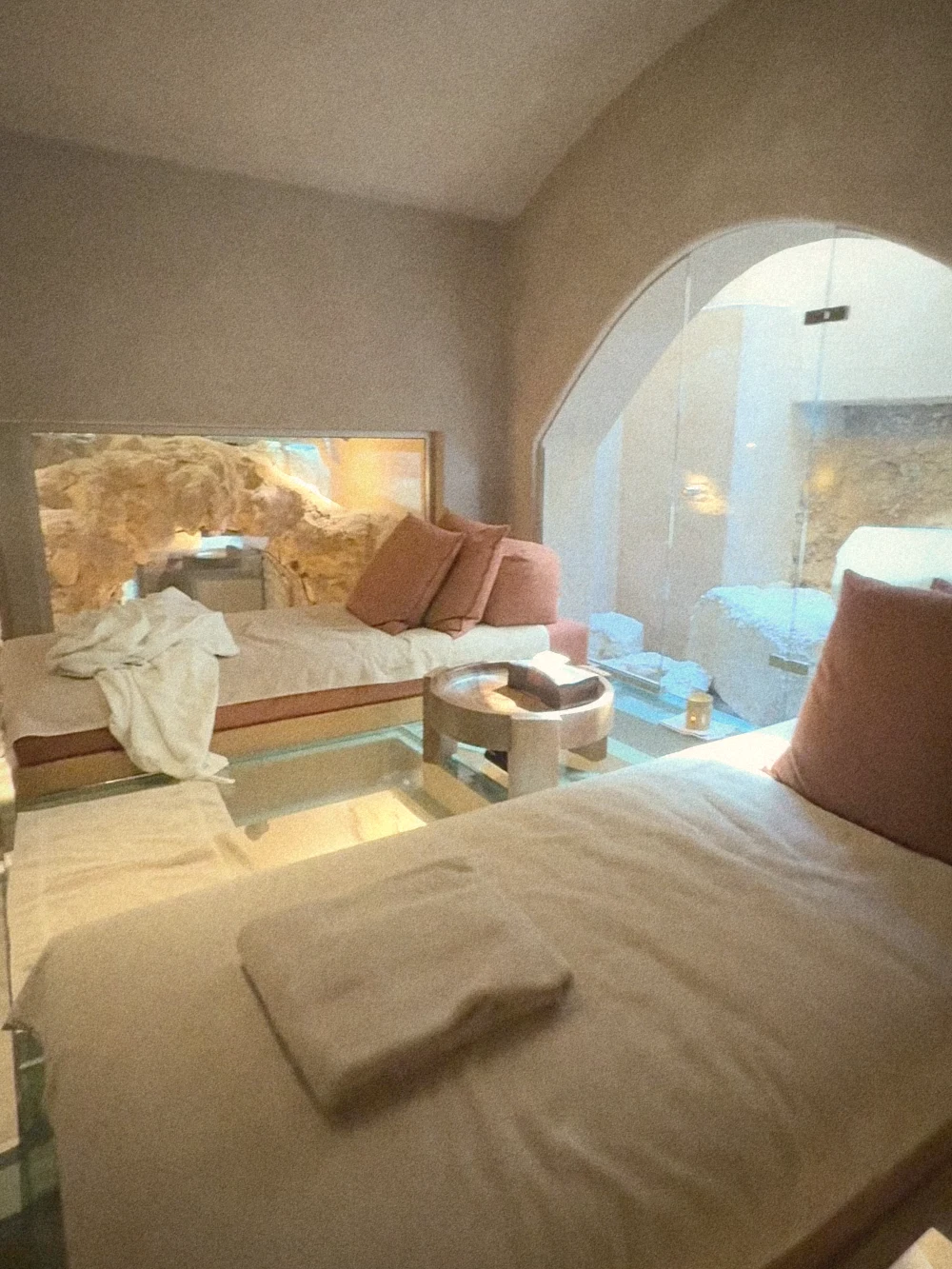
After the flight and a morning of climbing, we spent the hottest part of the afternoon at Niche Spa, the spa at Niche Hotel Athens on Syngrou Avenue, near the Acropolis Museum. Its full name is niche spa 300 B.C., and it isn't just a name: the spa is built around real ancient remains, dating mainly from around 300 BC, that were found when the building went up. You can see parts of the city's ancient defensive walls (including the later Valerian Wall), remains linked to the ancient Gymnasium of Cynosarges, and part of an old water channel, some of them right under your feet through glass floors.
I had the best lymphatic drainage massage of my life, which I desperately needed after all the travelling. Afterwards we lay by the warm relaxing pool, side by side, feet up, completely still for the first time since we landed. If you're flying into Athens to start a longer trip, book this for your first full afternoon. You'll feel human again.
Rooftop bars with a view of the Parthenon
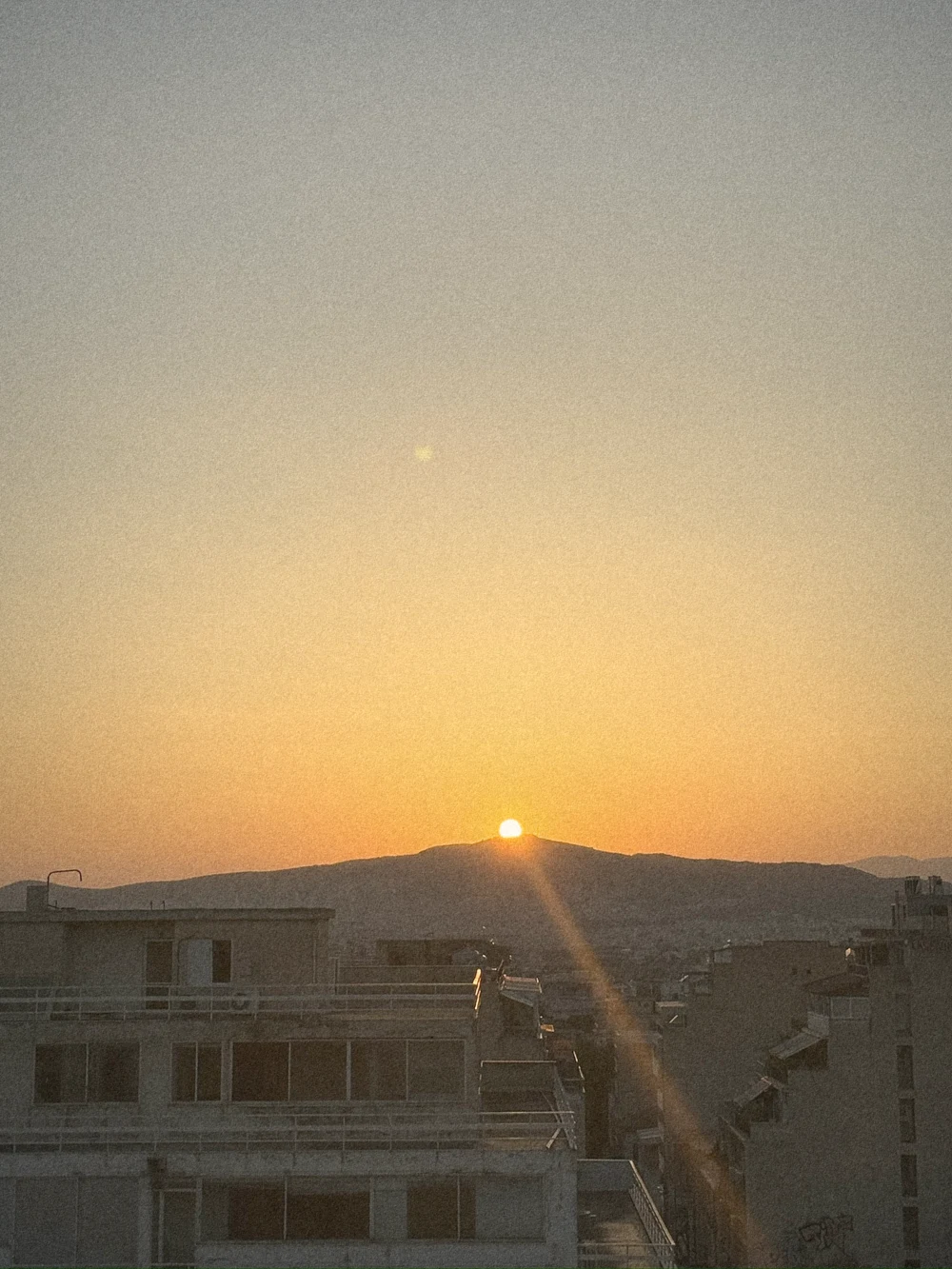
If the mornings in Athens belong to the ruins, the evenings belong to the rooftops. The sun sets over the hills, the city goes gold and then pink, and the Parthenon lights up on its rock. These were our three favourites.
- Taratsa Athens (60 Mitropoleos). Our 10/10 dinner: Greek and Levantine cooking over fire, creative cocktails and the Acropolis straight ahead. Book for sunset.
- MS Roof Garden (Athinas 1 and Ermou, Monastiraki). We loved it. It's a rooftop café, restaurant and bar right above Monastiraki, open from breakfast until late, with the Acropolis filling the view. Easy for a drink without a big plan.
- Attic Urban Rooftop (86 Ermou, 7th floor, by Monastiraki Square). The flower rooftop, and our last night in Athens. More below.
Cocktails on the flower swings at Attic
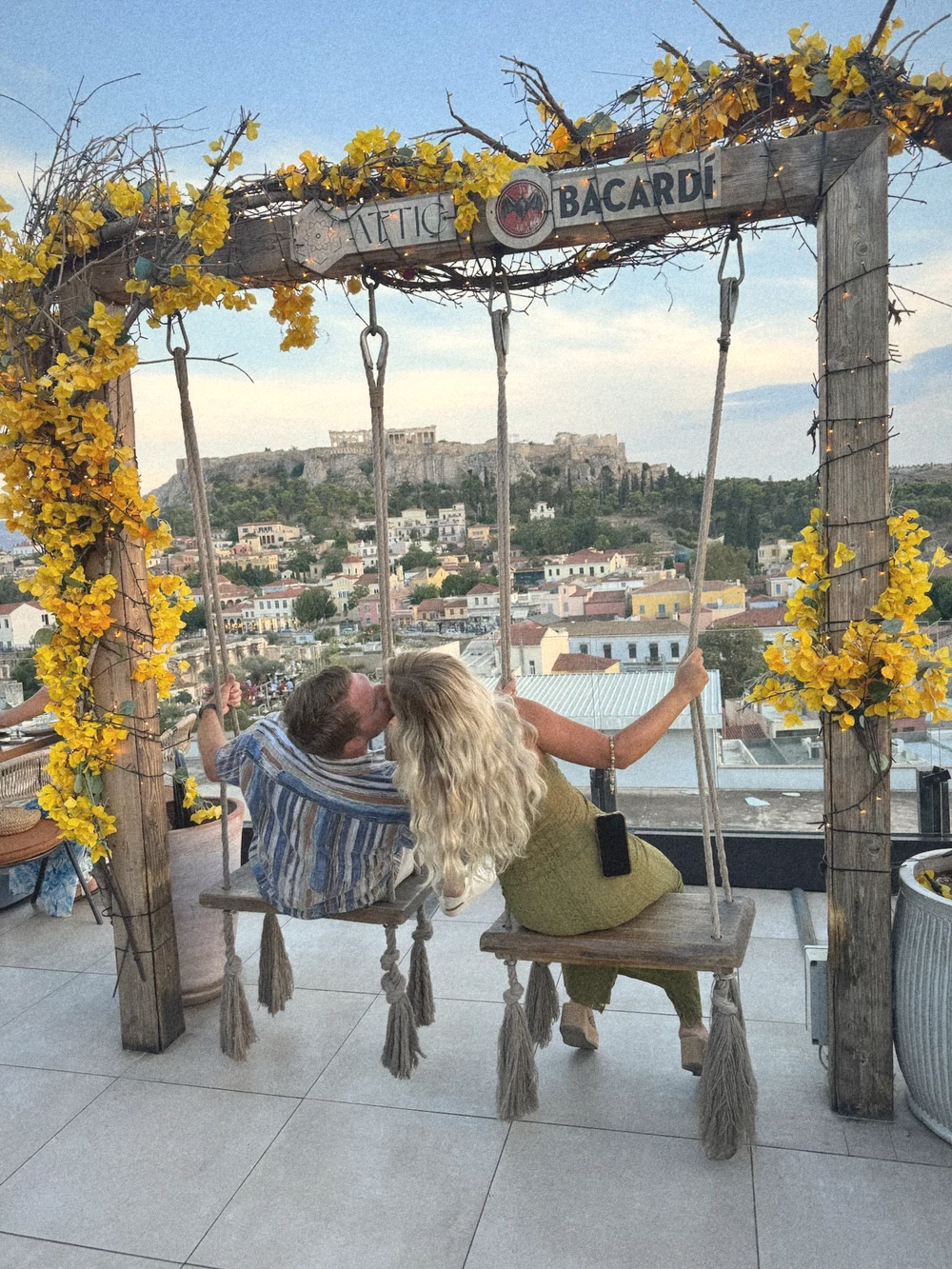
We saved Attic Urban Rooftop for our last night, and we loved it. The terrace is covered in flowers, and the famous swings, wrapped in yellow blooms, face the Acropolis across the rooftops of Plaka. Get there before sunset, grab a swing and don't rush.
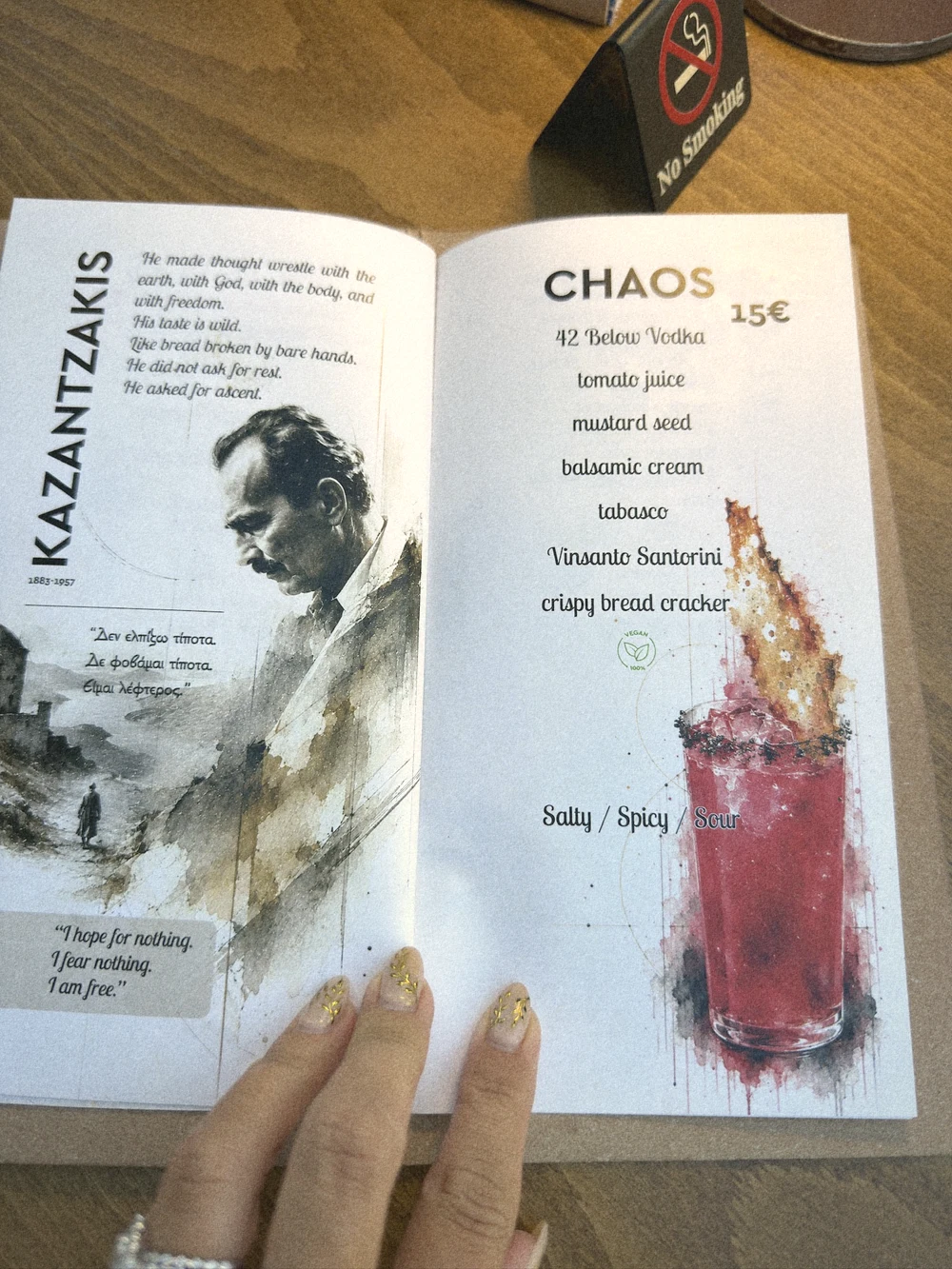
The cocktails were so cool. Each one on the menu is paired with a Greek thinker or writer, and we tried two of them:
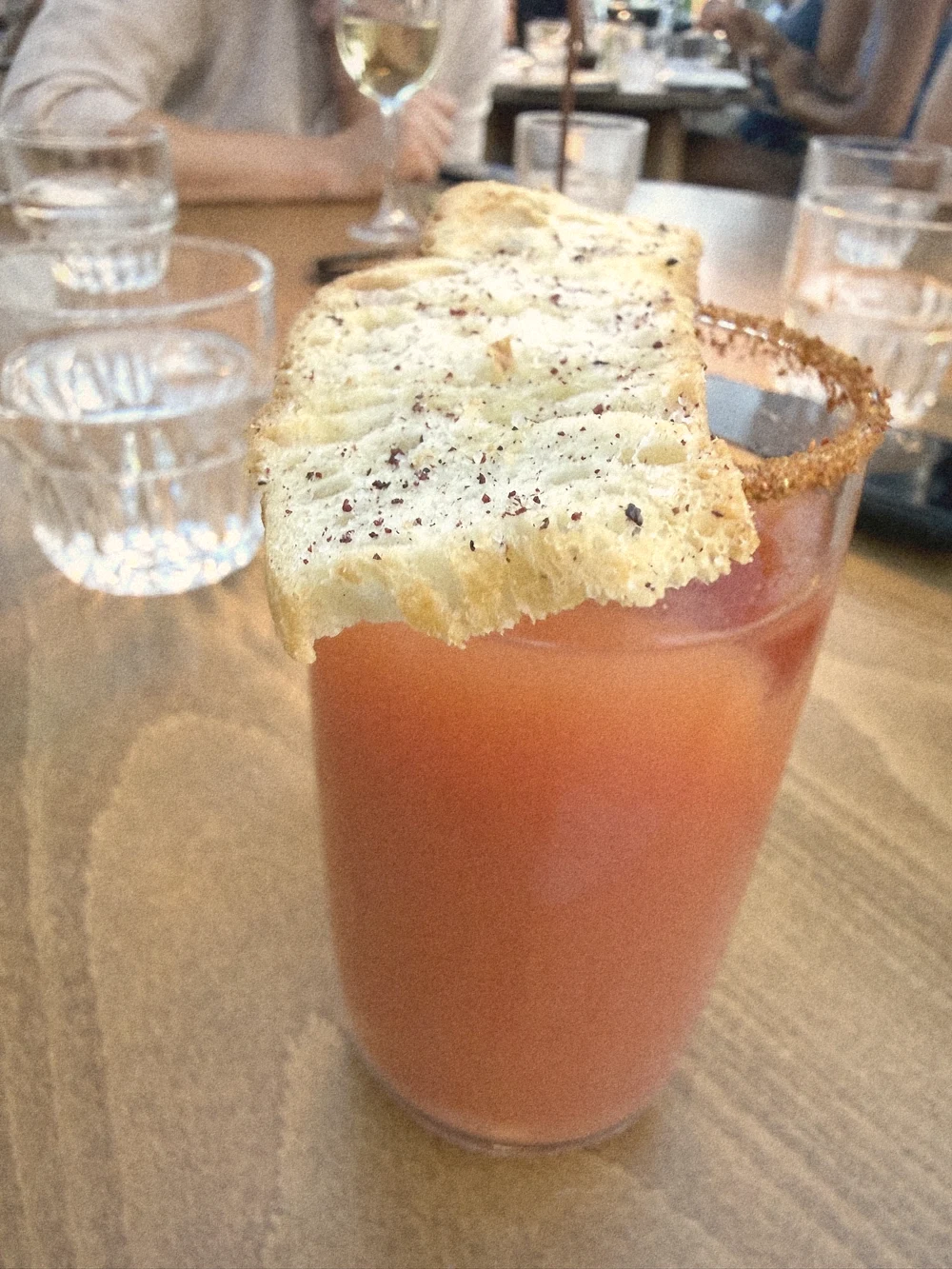
- Chaos (paired with the writer Nikos Kazantzakis): vodka, tomato juice, mustard seed, balsamic cream, Tabasco and Vinsanto wine from Santorini, served with a crispy bread cracker. Salty, spicy and sour, like the best Bloody Mary you've ever had.
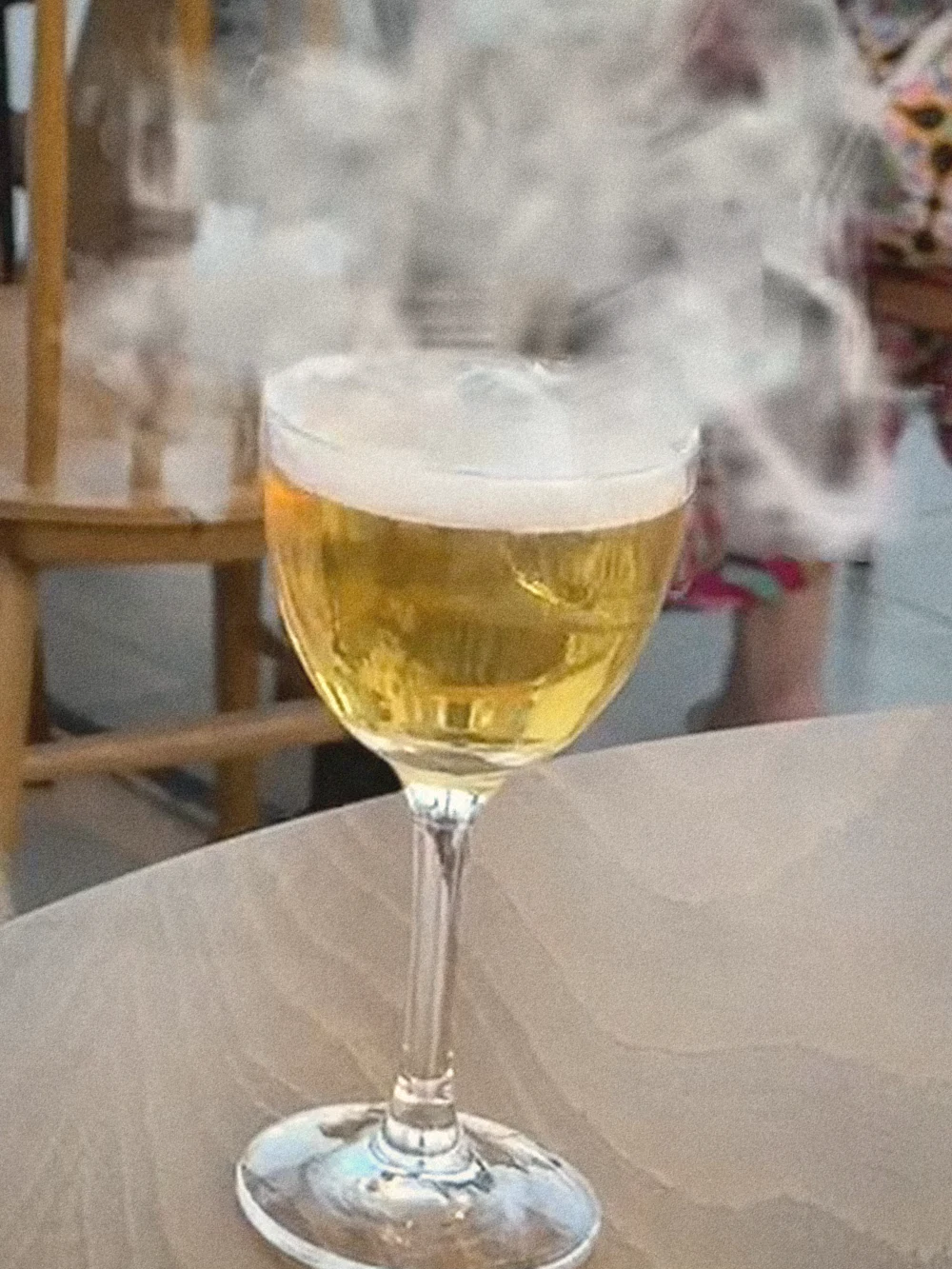
- Gnosis (paired with Socrates): vodka, Greek coffee, orange water and salted caramel, served with coffee smoke. It arrives under a glass dome, and when the bubble of smoke on top pops, the whole table leans in.
Where we stayed: The Pinnacle Athens
We stayed at The Pinnacle Athens, a small boutique hotel in what it calls the tallest building in the Commercial Triangle, right in the heart of the old centre. The hotel was beautiful, and the staff were so helpful from the moment we arrived. Its Roof Garden looks out over the Acropolis, Plaka and Lycabettus Hill, and the location is the real luxury: everything in this post was a walk away.
- The location. Central, on Aiolou Street, a few minutes from Monastiraki and within walking distance of the Acropolis.
- The staff. So helpful, with directions, bookings and recommendations.
- The view. A Roof Garden facing the Acropolis.
Couple tips for Athens
- Do the Acropolis first thing. In summer it's open 8am to 8pm (last entry 7:30pm), with shorter hours from September. Book a timed-entry ticket on the official site, tickets.hh.gr, or an early small-group tour, and you'll have cooler air, softer light and far fewer people.
- Stay central and walk. From a hotel near Monastiraki, almost everything in this post is a short walk away, and walking is where you'll find the little moments.
- Book your rooftops for sunset. The best tables at Taratsa, MS Roof Garden and Attic face the Acropolis, and they go first. Reserve ahead and ask for a view table.
- Hide from the midday heat at a spa. In summer, roughly noon to 5pm is too hot for ruins. Book a massage (we loved Niche Spa) and save the sightseeing for the morning and evening.
- Order the spicy feta everywhere. Tirokafteri is on most menus in Athens. Share it with warm bread and make it your tradition.
- Wear shoes with grip. The ancient marble is slippery and the paths are uneven. Save the pretty sandals for the rooftops.
Next stop: Santorini
From Athens we headed to the islands. Read our Santorini itinerary for couples next (a private pool above the caldera, dinner in a windmill and Mamma Mia under the stars), then our Paros itinerary, the island that stole our hearts.